
Las Vegas Resident Records
A one-person search works best as a chain of small confirmations. The Clark County Assessor distinguishes an owner’s mailing address from a parcel’s situs, or physical location. The Clark County Recorder indexes parties to recorded instruments. Court portals identify public case activity, and the election service has a narrow individual record route. None of those sources creates a complete list of everyone at an address. Together, they can help separate a matching name from a coincidental one.
| Las Vegas record | What it can confirm | Custodian | Access route |
|---|---|---|---|
| Parcel card | Assessed owner, situs, mailing address, APN, legal description | Clark County Assessor | Free current record online or office assistance |
| Recorded instrument | Party role, document type, record date, parcel context | Clark County Recorder | Online index from 1988; microfilm reaches 1909 |
| Court docket | Public case number, party, dates, and activity | Municipal, district, appellate, or federal court | Portal, clerk counter, or permitted request |
| Voter record | Registration-related status or district where available | Clark County Elections | Individual service and statutory file routes |
| Vital verification | Event verification when eligibility rules are met | SNHD, Nevada OVR, county clerk, or court | Form, mail, in-person, or authorized order path |
Start with the source that matches the known fact. An address points first to an Assessor parcel, while a person or company name can use the owner-search mode. A court case number belongs with its court. A birth, death, marriage, or divorce question goes to the custodian that holds that event. This order makes a one-person search more accurate and leaves a source date beside every conclusion.
Las Vegas Resident Name Variants
Before searching, write down the surname, given name, middle initial, suffix, former surname, and any company or trust spelling. Las Vegas has several jurisdictions and a large, mobile population, so a common name needs more than one matching field. A parcel number, spouse name, document date, legal description, or court case year is more useful than a guess based on a surname alone.
Keep the result tied to its source. The Assessor can return a current parcel record or present and prior owners of a parcel. Its mailing address may be a post office box or an address outside Nevada, so it is a correspondence clue rather than proof that someone lives at the situs. The recorded date and document number on a parcel card can guide a Recorder search, but the Recorder party name still needs to be checked against the parcel and instrument type.
Las Vegas Resident Court Checks
The Eighth Judicial District Court Finder offers Party, Case Number, Judge, and Bar Number search categories. Its calendar search has a 30-day date range, so it is not a substitute for a full historical file search. When no case number is known, the Clerk’s route supports complete party names plus year. Public access varies by division. Active trial cases may be locked until completion, family minutes are generally not online, and sealed files have separate access rules.
The captured Court Finder screen shows the search choices and date controls used to look up a Las Vegas resident. It is a useful first check for a name connected to a public case, not a conclusion about identity or residence.
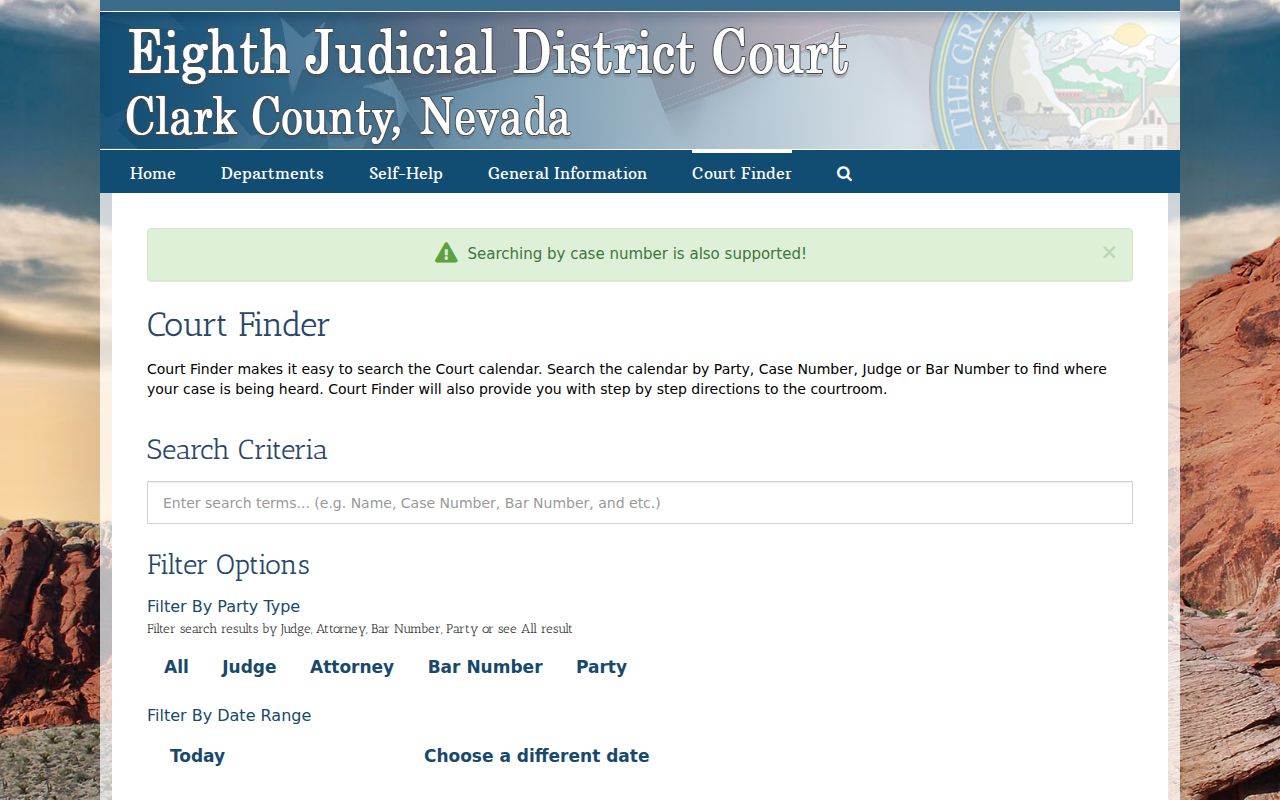
After a result, compare the party role, case type, year, and available calendar details with an independent parcel or Recorder record. A pre-1990 Clerk search costs $0.50 per year and name, while copy or search requests generally take five to ten business days. The Regional Justice Center third-floor counter, mail, drop-off, and off-site record channels remain the fallback when a portal does not expose a needed public file.
| Court Finder field | What the search surface shows |
|---|---|
| Search category | Party, case number, judge, or bar number |
| Calendar fields | Beginning and ending dates, with a 30-day search range |
| Possible public details | Case number, dates, hearings, minutes, orders, judgments, and docket activity by division |
Las Vegas Resident Voter Check
Clark County Registered Voter Services is an individual confirmation tool. The inspected form displays first name, last name, last four of an ID number, and date of birth in MM/DD/YYYY format. The post-login result labels were not available during the research inspection, so it is not appropriate to promise a particular screen or match behavior. It also does not offer a public whole-address or whole-block browser.
The captured voter-lookup screen shows the narrow inputs used to look up a Las Vegas resident. Use only the official service and respect its access conditions.
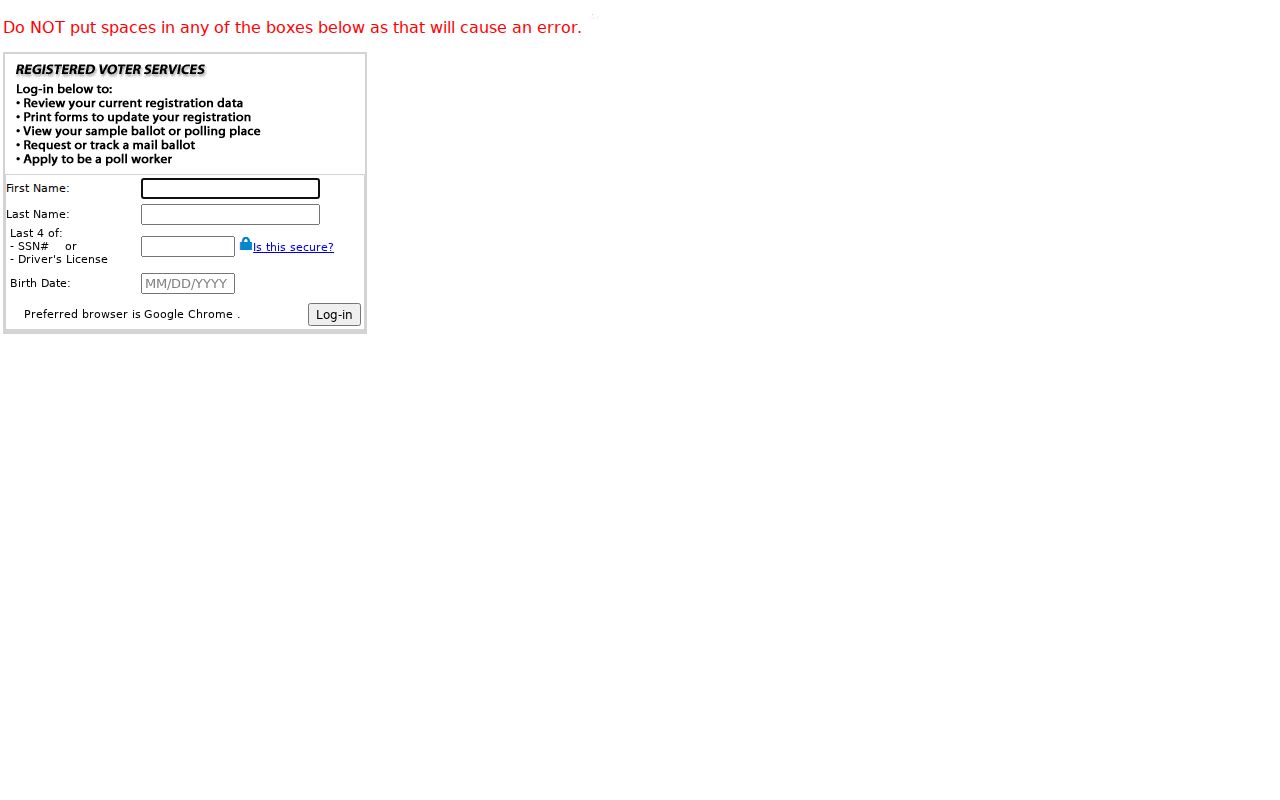
NRS 293.503 makes specified registration and list-maintenance information public, while NRS 293.558 protects Social Security numbers, driver-license or ID numbers, email, and some address or phone information. A protected address or a Confidential Address Program record is a privacy measure, not evidence that a person is absent. The Elections office can answer file questions, and an identifiable-record request may use the county public-records portal.
Las Vegas Resident Vital Rules
Birth, death, marriage, and divorce are not one interchangeable record set. The Nevada Office of Vital Records holds Nevada birth and death certificates from July 1, 1911 forward, while the Southern Nevada Health District issues Clark County birth and death copies. Marriage records are county-level through the Clark County Clerk. Divorce decrees and files belong with the Eighth Judicial District Court Clerk. The state can search marriage or divorce verification records after 1968 through September 2005 when the date or county is unknown.
The Nevada vital-record forms hub shows the official request and verification routes. It is the right starting point for eligibility and form details, rather than an open name index.
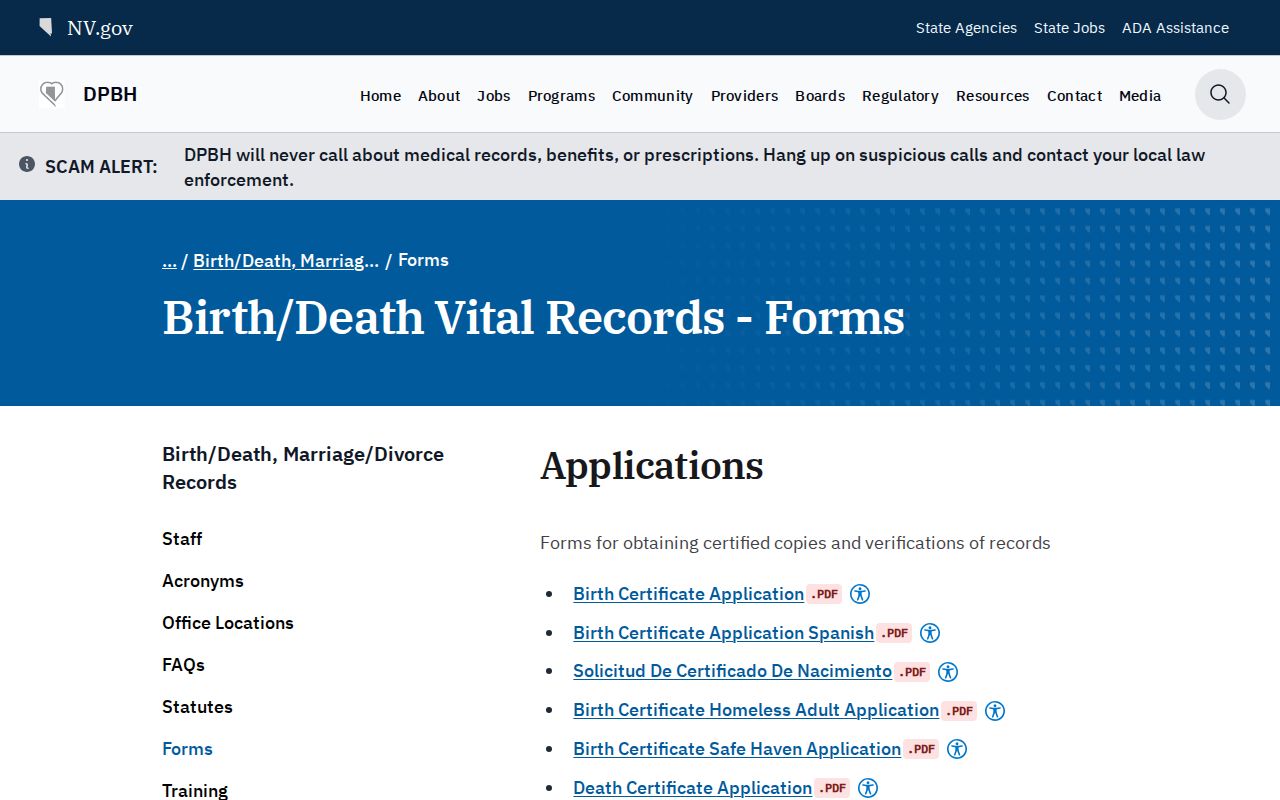
NRS 440.120 opens birth information after 125 years and death information after 50 years, subject to the statute. Before those periods, NRS 440.650 and NAC 440.070 require direct and tangible interest for certified copies. Clark County certified birth and death copies are listed at $25, and the state verification form lists $10 per verification. Genealogical searches require an appointment and are listed at $10 for each name or name variant searched.
Verifying a Las Vegas Resident
A reliable one-person search moves from a claim to corroboration. Use records with different purposes so a tax card, docket, or mailing address is not treated as a complete identity record. If a name appears in several systems but the parcel, date, or jurisdiction conflicts, keep the result unresolved and ask the actual custodian about the record.
- Normalize the name and record spelling variants, initials, suffixes, and any trust or company name.
- Search the Assessor by owner when a name is known, or by address when a parcel is known. Record the APN, situs, mailing address, and current or prior-owner setting separately.
- Use the APN or verified party name in the Recorder index. Compare the grantor or grantee role, instrument number, record date, and legal description before connecting records.
- Check an appropriate court or voter route only for the narrow fact it can confirm. Request a file or certified copy from the custodian only when the access rule permits it.
- Docket
- A court’s running list of filings, events, hearings, and orders in one case.
- Index and image
- An index points to a record. The image is the underlying document or scan, which may require a purchase or counter inspection.
- Certified copy
- A copy issued and authenticated by the custodian for uses that require the office’s certification.
For an heir search, begin with a public probate party or docket entry and a later recorded transfer, then follow the court’s rules for a will or order. For a former classmate, a school year and a yearbook or newspaper archive are better first leads. The historical volumes available through Las Vegas city directories can supply a dated address, but they do not establish a current one.
Las Vegas Resident Search Dead Ends
A blank result does not prove that a person never lived in Las Vegas. It can reflect a name variant, a postal label outside city limits, a sealed or confidential file, a protected voter address, or a record set that is not online. The Recorder’s online official-record index starts in 1988, although its microfilm route reaches back to 1909. Older material needs a public research counter, microfilm, or copy request rather than another search against the online cutoff.
Nevada Public Records Act requests should ask the custodian for identifiable existing records, with a date range and parcel, case, document, or address key where possible. Under NRS 239.0107, an agency generally responds within five business days by providing access, denying with a legal citation, or explaining the status and expected timing. Ask for segregable public portions when a record includes confidential material. A request for every record about a person is usually less useful than a focused request tied to a known record number.
Historic leads also have their own channels. UNLV Special Collections, the Cahlan Research Library, newspapers, yearbooks, census schedules, and Recorder microfilm can help connect an old address to a date. Those sources are historical clues, not a shortcut around sealed adoption, juvenile, confidential family-law, or protected-victim material.
Las Vegas Resident Privacy Rules
Nevada’s public-record default under NRS Chapter 239 yields when another statute makes information confidential. Voter records have protected identifiers and address exceptions. Vital records follow statutory release periods and qualifying-interest rules. Motor-vehicle personal information is restricted under the federal Driver’s Privacy Protection Act. A public docket label is also not permission to copy sensitive filings.
The Nevada Confidential Address Program provides qualifying survivors with a designated fictitious address and mail forwarding. A participant can be a Las Vegas resident even when ordinary address data is withheld or unavailable. Do not attempt to reverse that protection. If an official record appears factually wrong, preserve the source details and ask its custodian about the applicable correction or redaction procedure.
Las Vegas Resident Search Limits
Official records are most useful for family history, reconnecting with a known person through lawful channels, estate research, civic questions, or checking a seller’s recorded property trail. They are incomplete by design. A parcel owner may not be the person living at the location, an old voter address may no longer be current, and a court entry can involve a different person with the same name. Keep the evidence narrow, dated, and tied to its custodian.
Lawful use. Use public information for a personal, lawful purpose. Do not use it to stalk, harass, threaten, or intimidate anyone.
When a record is important, obtain it from the office that holds it and compare its identifiers with a second official source. That final check is more valuable than a long list of unverified matches.