
Search Las Vegas Resident Records
Start with the record keyed to the information already known. An address belongs first in the Clark County Assessor search, which can connect a location to an assessed owner, a situs address, a mailing address, and an APN. A name can also lead to the Assessor, then to the Recorder’s instrument index. A court party search, voter service, or archive source is a second check, not a substitute for the property trail. The Las Vegas residents directory is therefore a set of official and archival routes, not one public household list.
Keep the role shown by each result straight. An owner may not be at the situs. A deed party may be an estate, trust, or earlier owner. A directory entry can describe a past occupant. A blank result can reflect a protected record, a different jurisdiction, a spelling variation, or a coverage gap. Record the source date, the exact name, and the parcel or case key before moving on.
- Search the Assessor by address, owner name, or parcel number and save the APN, situs, mailing address, and city or unincorporated-town field.
- Use the APN or name in the Clark County Recorder’s AcclaimWeb index to identify recorded instruments and their dates.
- Use the official voter or court channel only for the narrow confirmation it provides, respecting its access rules and protected fields.
- For a past household, check UNLV, Cahlan, FamilySearch catalog entries, and newspapers around the date in question.
- When an online result stops short, ask the actual custodian for an existing, identifiable record through the counter, archive, copy route, or Nevada Public Records Act request.
Note: A precise APN, document number, or case number makes a records request clearer and helps the custodian locate an existing file.
Las Vegas Resident Records Offices
Clark County keeps the core property trail. The Recorder indexes recorded instruments, the Assessor maintains parcel cards, and Elections maintains voter services. The courts and the City of Las Vegas hold different kinds of material, while library and archive collections preserve historical context. Each office has a distinct legal role, so a result from one should not be stretched into a claim that another office would make.
Clark County Recorder
500 S. Grand Central Pkwy.
Las Vegas, NV 89155
702-455-4336
Clark County Assessor
500 S. Grand Central Pkwy.
Las Vegas, NV 89155
702-455-3882
Clark County Elections
965 Trade Dr.
North Las Vegas, NV 89030-7802
702-455-8683
The Recorder’s index is online for official records from 1988, while its historical microfilm begins in 1909. The Assessor’s detail is current property administration, including the location and mailing fields. The Elections portal is an individual service, not an ordinary whole-street roster. Those different access channels matter when a question cannot be answered online.
Las Vegas Assessor Parcel Search
The Assessor is the practical starting point for a current address question. Its owner search takes a last name or company name, an optional first name, a phonetic option, and a choice between a current parcel record or present and prior owners. Its address search uses street number, direction, street name, street type, and city or town. Street name is required. The city or town selection is a legal-boundary field, so leaving it blank can prevent an incorrect no-hit when the mailing city and jurisdiction differ.
| Assessor field | Use | Format or result note |
|---|---|---|
| Owner name | Find a parcel from a person or company | Last or company name is required; first name is optional. |
| Street address | Find a parcel from a location | Street name is required; a supplied number can return nearby addresses within three blocks. |
| Parcel number | Open a specific parcel card | Requires exactly 11 digits, commonly displayed with dashes. |
| Subdivision or NAMS | Bridge map and development references | Subdivision can begin with its first word; NAMS uses a book-section-page style input. |
The official Assessor search displays the menu of owner, address, APN, subdivision, NAMS, map/page, parcel-map, and GIS routes captured here.
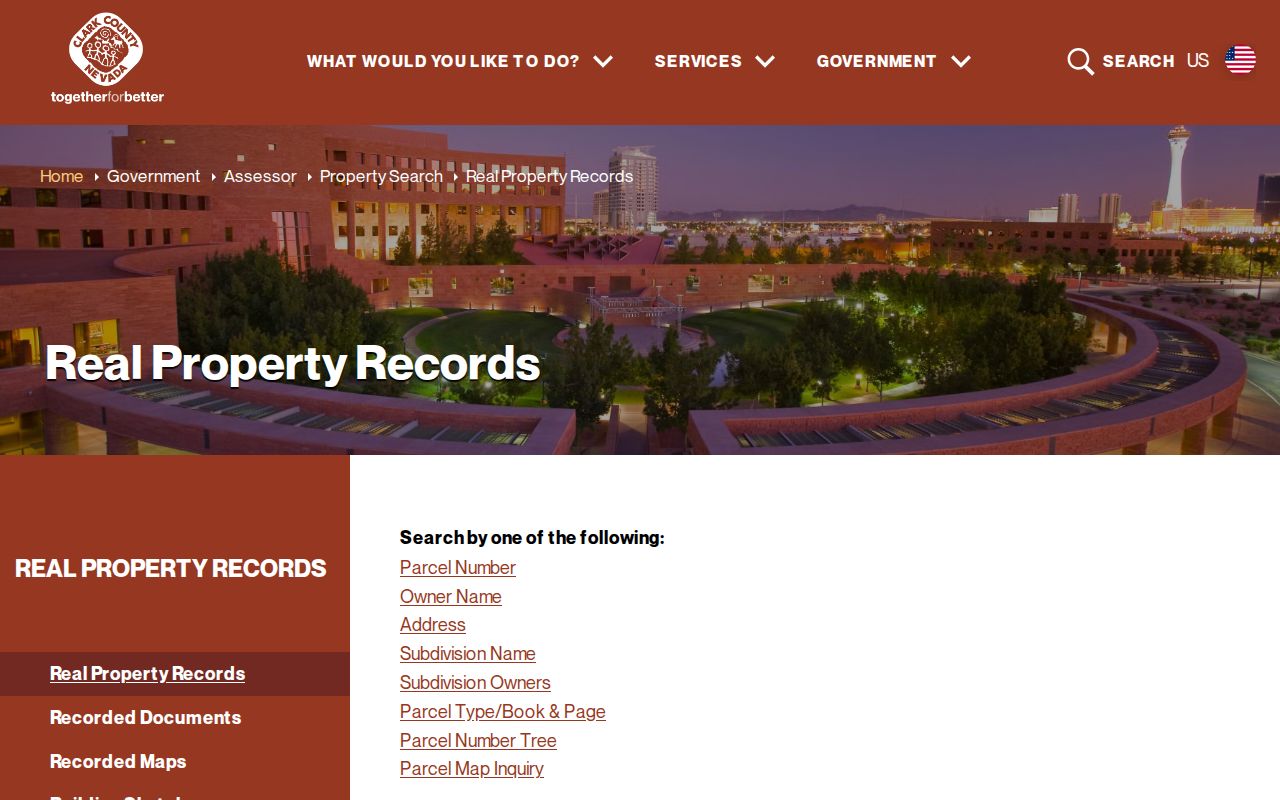
Use the resulting parcel card to preserve the APN and legal description before checking a recorded document. Those keys are steadier than a street label alone.
Las Vegas Mailing Address Myth
A mailing address and a situs address answer different questions. The Assessor can show an owner’s correspondence address separately from the parcel’s physical location. Research examples include a Las Vegas situs paired with a Nevada post-office box and another Las Vegas situs paired with a Colorado mailing address. Neither example establishes who is physically present at the location.
- Parcel
- An Assessor-defined property unit with a number used to connect the card, map, and recorded instruments.
- Situs address
- The physical location of the parcel used for property administration.
- Mailing address
- The address selected for owner correspondence. It can be outside Las Vegas or a post-office box.
- Legal description
- The lot, block, subdivision, or survey wording that identifies land even when a street address changes.
Las Vegas is also a postal label used beyond City of Las Vegas boundaries. Paradise, Winchester, Enterprise, Spring Valley, and other unincorporated areas can use a Las Vegas mailing city. Check the parcel’s City or Unincorporated Town field and the City/County boundary layers before assigning a municipal custodian.
Las Vegas Recorder Index Trail
The Recorder’s AcclaimWeb search is the link between a property key and a recorded document. Search by principal party, parcel number, instrument number, document type, record date, total value, or legal-description components. The name interface offers starts-with, contains, and exact matching. Parcel search accepts an APN, and legal-description tools include subdivision, lot, block, unit, tract, section, township, range, and address components.
An index result can identify principal parties, document type, recording date, book type, instrument number, and parcel or legal-description context. It does not make the image a free online public view. For an image or a pre-1988 instrument, use the Recorder’s purchase route or public inspection counter. The index begins at 1988 for official records, but the office’s microfilm channels reach to 1909. That split is a research fork, not evidence that an earlier deed never existed.
For a named-street project, the address chain belongs on the Las Vegas by-street directory. That route begins with an APN, then follows parcels and instruments rather than treating an address list as proof of every person at the location.
Note: The Recorder states that indexing generally takes one to three days, so a very recent recording may not be immediately searchable.
Las Vegas Court and Voter Checks
Courts can confirm a party name within a case system, and voter services can confirm a narrow registration relationship where access is authorized. They are different records. The Las Vegas Municipal Court search uses last name, optional first name, date of birth, an operator menu, and CAPTCHA. Municipal result reports can include case and citation numbers, violation date, department, court date, sentencing fields, and activity. Coverage dates were not published in the inspected material.
The Eighth Judicial District Court Finder provides party, case-number, judge, and bar-number categories with a date window limited to 30 days. For older or unavailable court material, the clerk’s counter, mail, and off-site request channels remain important. The Clark voter portal asks for first and last name, a displayed four-character ID field, and date of birth. It does not offer a public street browser, and ballot choices are not public.
The official municipal case-search form is shown by the Las Vegas Municipal Court source.
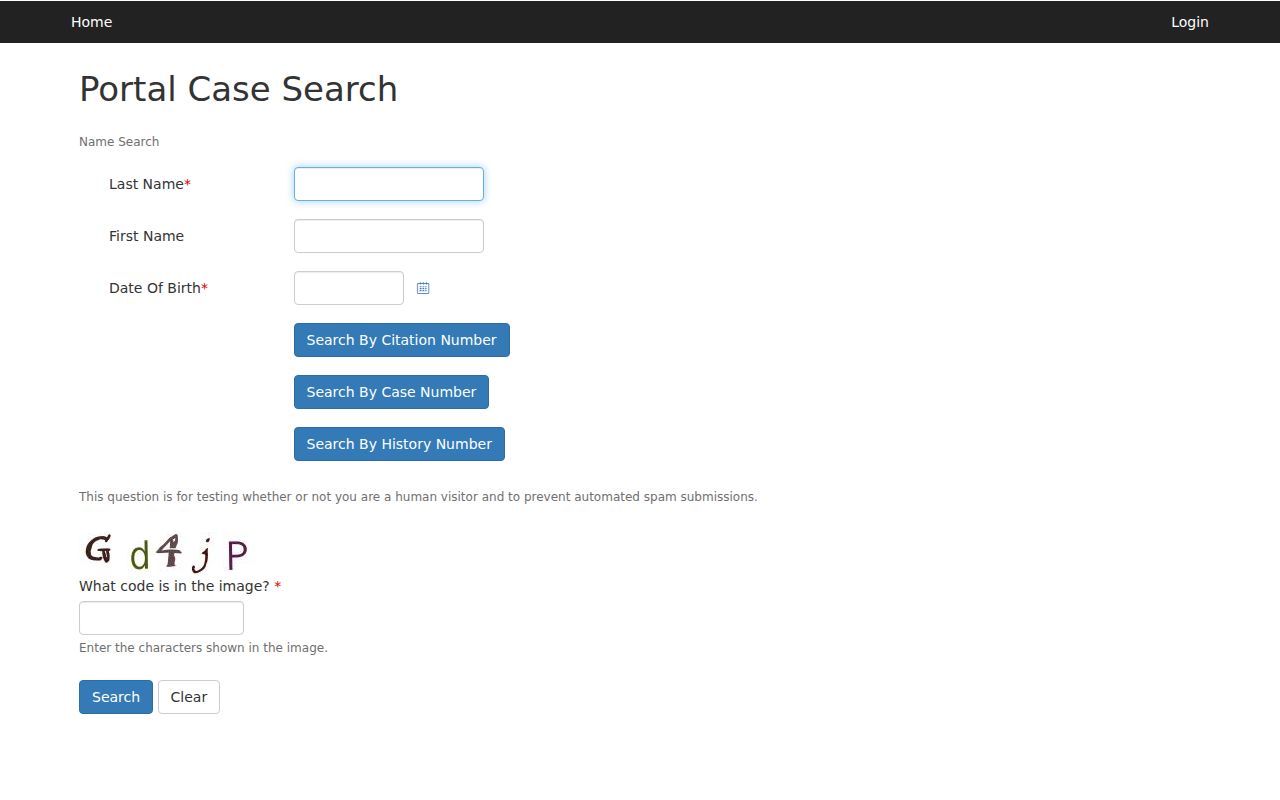
Use a court result to distinguish names and dates, then request a file from the proper clerk only when its access rules allow it.
The voter portal fields appear on Clark County Registered Voter Services.
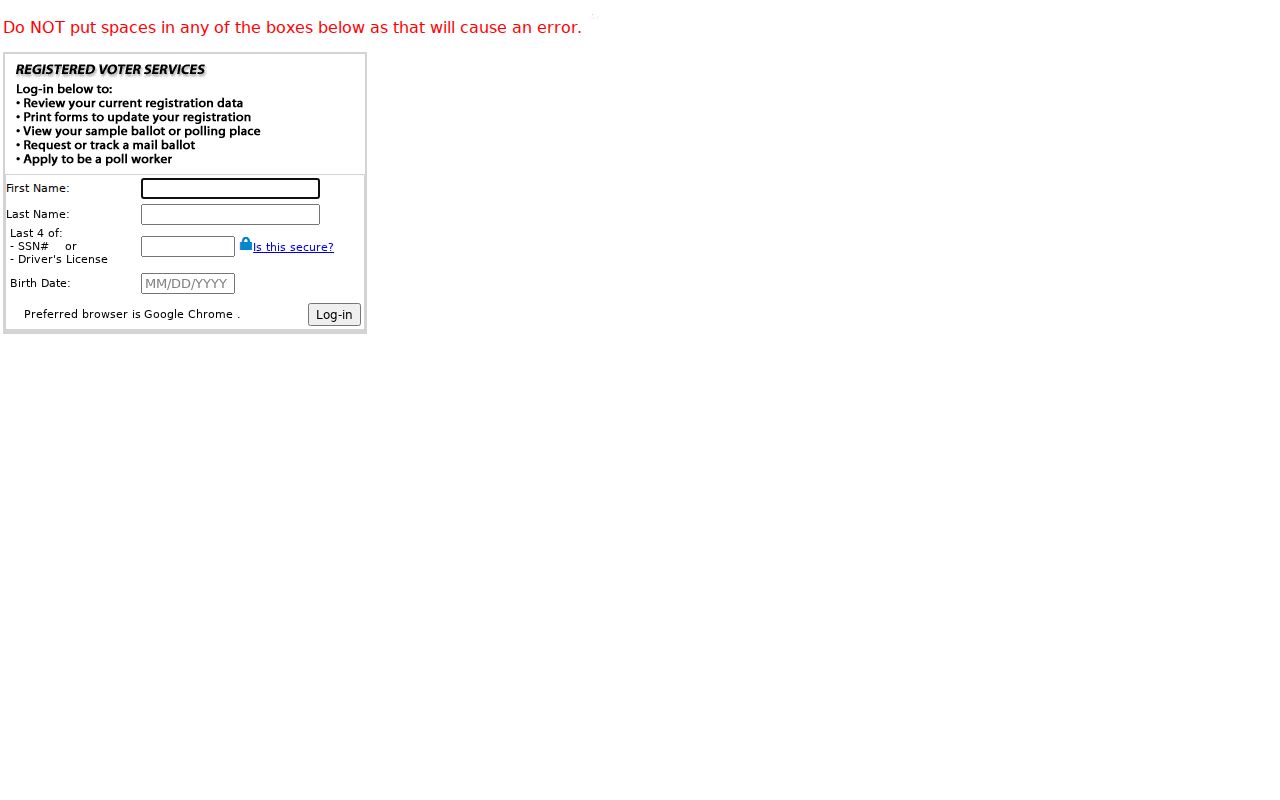
Protected addresses, confidential participants, and status changes mean that an unavailable or old voter result should never be treated as proof of nonresidence.
Current Las Vegas Resident Sources
The strongest current sources are organized around property, recorded instruments, individual voter service, and public court dockets. None is a complete public household list. A parcel card tells who the Assessor lists as owner and where correspondence is sent. A Recorder entry shows recorded parties. A voter record is governed by election access rules and confidentiality exceptions. The records must be read for the specific relationship each one documents.
| Las Vegas source | Relationship shown | Custodian | Access route |
|---|---|---|---|
| Assessor parcel card | Assessed owner, mailing and situs address | Clark County Assessor | Free online detail, office, phone, and datafiles |
| Recorder index | Recorded principal parties and property context | Clark County Recorder | Public index, paid image or office inspection |
| Voter service or file | Registration status and permitted election data | Clark County Elections | Individual portal or statutory/request route |
| Court case index | Named parties and case activity where public | Municipal or court clerk | Portal, counter, mail, or record request |
| Association GIS data | Association boundaries and public contacts | City or County GIS | Map or registration layer, not a member roll |
Official records and commercial compiled profiles differ in purpose and reliability. Official sources identify their custodian, field limits, and request channel. Commercial compilations may merge same-name people, carry an old address, or lack the source date. Use the custodial record to verify a claim, especially when a name is common or the address crosses a jurisdiction line.
Las Vegas Vital Record Boundaries
Vital records are not a shortcut to a current address. Nevada’s Office of Vital Records is the legal custodian for Nevada birth and death certificates from July 1, 1911 forward, while the Southern Nevada Health District issues Clark County birth and death copies. Birth information opens after 125 years and death information after 50 years under NRS 440.120. Before those periods, certified copies require the direct and tangible interest described in NRS 440.650 and NAC 440.070.
Marriage and divorce are county-level records. The state can search marriage or divorce verification records from 1968 through September 2005 when the county or date is unknown, but verification is not the underlying county document. For a Clark County marriage record, contact the County Clerk; for a divorce decree or file, use the Eighth Judicial District Court clerk. Mail, in-person, and online-order procedures exist for vital applications, subject to eligibility.
The Nevada vital-records forms hub shows the application and verification routes.
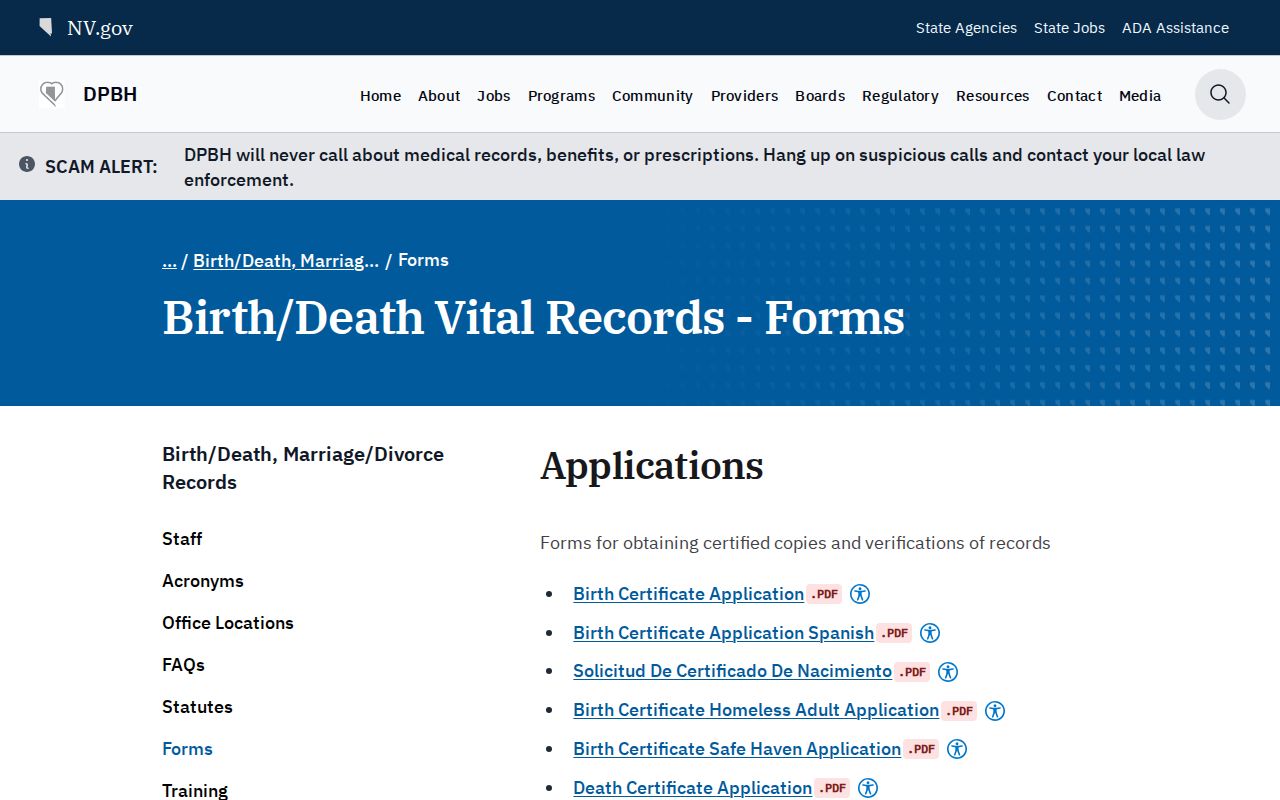
For older Las Vegas research, pair the eligible vital-record route with Recorder material, newspapers, church records, cemetery files, and archives instead of assuming a public name index exists.
Historical Las Vegas Directory Collections
Historical research moves from current parcel keys to physical and digitized collections. UNLV’s Regional History Files list Las Vegas City Directories for 1969 and street files from 1913 to 1971. FamilySearch catalog entries surfaced local directory issues for 1934, 1937 to 1938, 1954, 1957, and 1959, but image access and holdings should be checked at the time of use. A reverse or criss-cross volume is useful only after confirming that the particular volume supports address-to-name searching.
Cahlan Research Library is a free, appointment-based, noncirculating local-history room with phonebooks, yearbooks, newspapers, maps, manuscripts, and microfilm. UNLV and Cahlan also provide the newspaper route for an obituary, address, or civic notice. A directory entry may indicate an address, spouse, occupation, or business association for its publication year. It does not itself establish ownership or present residence.
The full collection trail is organized on the Las Vegas City Directories page, including the specific shelves and the cautious way to read a historical entry.
Las Vegas Records Beyond the Portal
Online access is not the whole record. The Recorder’s public inspection and microfilm channels reach material before the 1988 online cutoff. The Eighth Judicial District Court clerk accepts counter, mailed, dropped-off, and off-site records requests; pre-1990 name searches and copies have their own fee and timing rules. City Archives & Records Center holdings include building and business permit microfilm back to 1929 and Woodlawn cemetery material back to 1941, although obsolete equipment and digitization needs can limit retrieval.
For an agency record not posted online, make a focused Nevada Public Records Act request under NRS Chapter 239. Identify the custodian, record type, date range, location, APN, case number, or document number, then ask for the public portions of existing records and the legal basis for any withholding. NRS 239.0107 generally requires a response within five business days by providing access, denying with authority, or giving a status and expected response time.
Note: A request for “all records” is less useful than a bounded request for an identified parcel, instrument, case, date range, or record series.
Las Vegas Blank-Result Myth
A no-hit does not prove that a Las Vegas record never existed. The online Recorder index begins in 1988, while microfilm begins in 1909. Court files may be division-specific, sealed, or held through a clerk request. City archive material can be known to exist but not be immediately viewable because of equipment limits. The voter portal is not a street search, and a protected address may be withheld. Start again with a name variant, an older street name, a legal description, or the right jurisdiction.
The city’s adopted grid also makes directions and street types important. Main Street and Fremont Street form the local origin system, but historical addresses can contradict the modern pattern. UNLV street-name files, the indexed 1957 to 1961 R. L. Polk Arrow map, and Sanborn references from 1928, 1943, and 1953 are useful bridges when an address has changed.
Las Vegas Record Scam Signals
Use a government domain or a known office phone number before paying for a deed, case, or claim. A deed-copy solicitation may look official but can charge far more than the Recorder’s stated copy fee. A recording-fraud message should be checked against the Recorder, not the caller’s payment demand. The Recorder’s Recording Notification Service can provide name or APN alerts, but it is not complete, gives no document contents, and is not the official record.
Court and jury impersonators may demand rapid payment through gift cards, cryptocurrency, or an unknown phone number. Verify a purported case or fine directly with the municipal or district court’s official contact. Preserve the message, document number, web address, and payment request for the custodian or consumer-protection channel. For a credible safety threat or protected-address exposure, contact emergency services, local law enforcement, or a victim advocate rather than trying to locate the person.